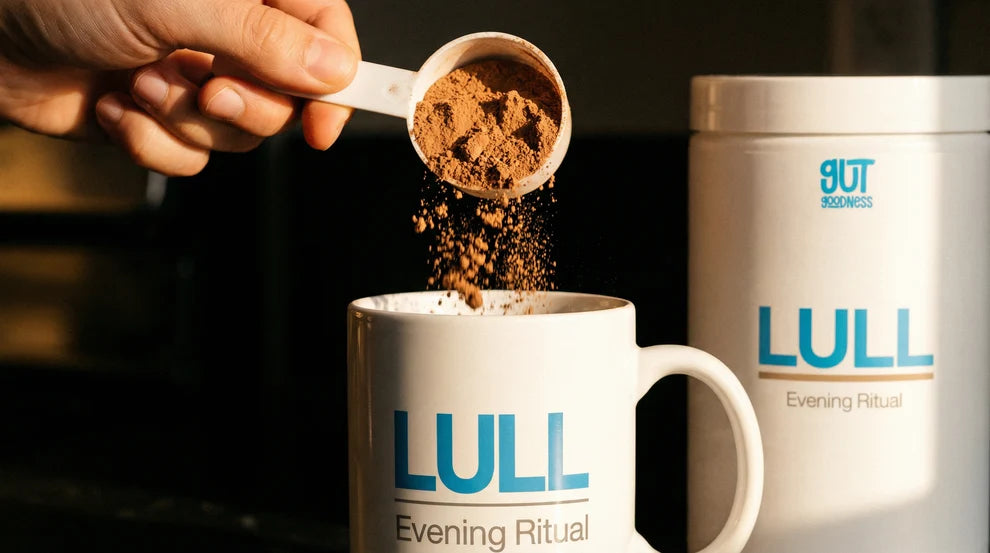
Your gut does more than digest food. Through the gut–brain axis, it communicates with the nervous, immune and hormonal systems. That's why LULL begins with a digestive foundation: baobab and PHGG, two sources of prebiotic fiber.
01 · NOURISH
Fiber feeds the microbiome.
Beneficial gut microbes can ferment certain fibers, including prebiotic fibers, as part of a healthy digestive ecosystem.
02 · PRODUCE
Microbes make SCFAs.
Fermentation produces short-chain fatty acids such as acetate, propionate and butyrate—molecules involved in gut and metabolic signaling.
03 · COMMUNICATE
Signals travel through multiple pathways.
The vagus nerve carries signals between the gut and brainstem. Microbial metabolites can also influence gut–brain communication through immune, hormonal and other neural pathways.
Where serotonin fits in
Much of the body's serotonin is made in the gastrointestinal tract, where it helps regulate gut function. Microbial activity can influence its production, but gut-produced serotonin does not directly enter the brain.
Why melatonin-free matters
Melatonin is a hormone involved in circadian timing, and it is also found in the gut. LULL contains no added melatonin. Its fiber supports digestive wellness; it is not presented as a way to raise serotonin or melatonin levels.